
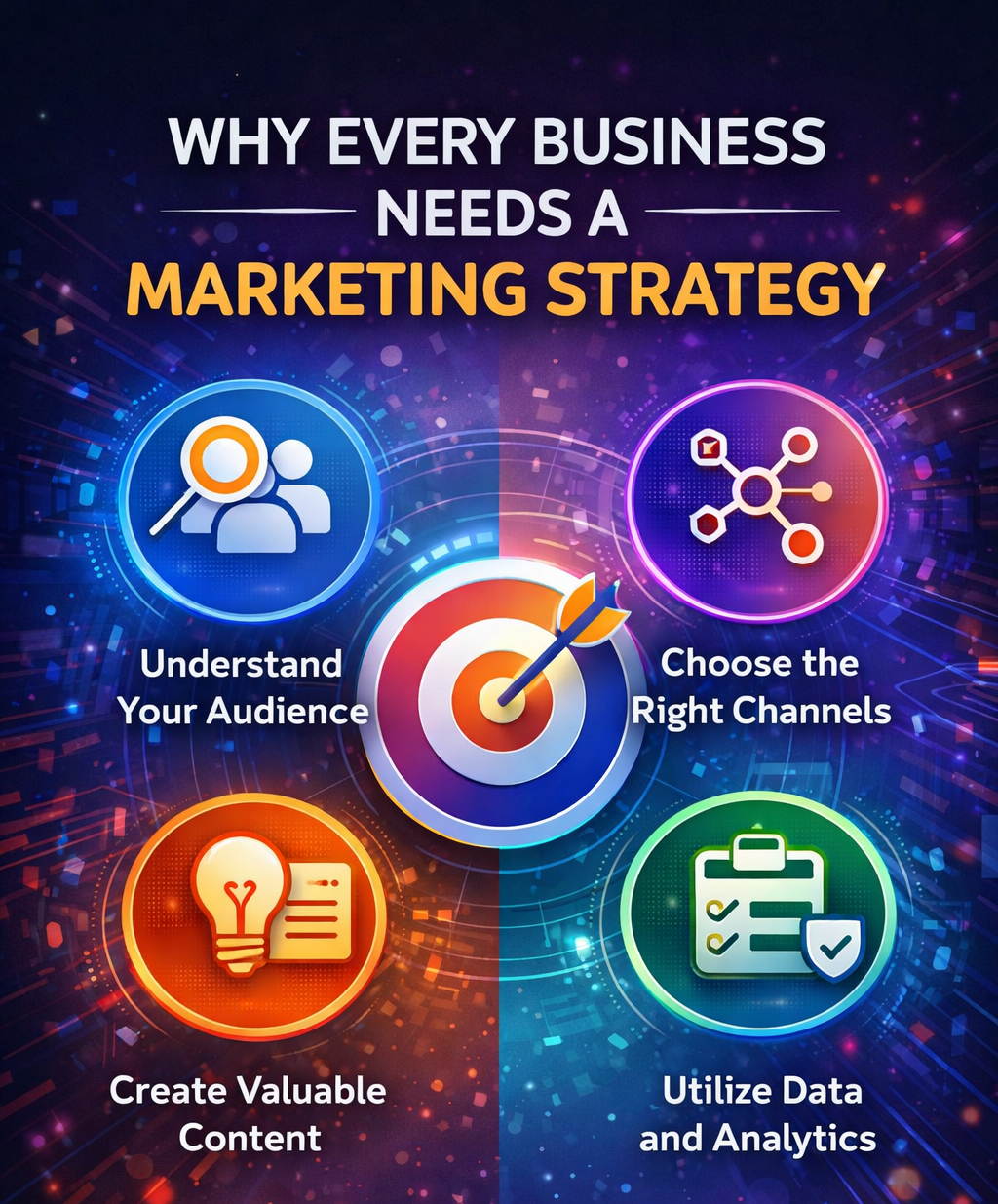

In today’s competitive digital landscape, simply having a product or service is no longer enough. Businesses must have a clear and effective marketing strategy to reach their target audience, build trust, and generate consistent growth.
Many companies invest in marketing activities such as social media, advertising, or content creation, but without a cohesive strategy, these efforts often fail to produce meaningful results.
A strong marketing strategy ensures that every effort works together toward a common goal—growing the business.
The Importance of a Clear Marketing Strategy
A well-defined marketing strategy provides direction and focus. Instead of trying random tactics, businesses can make informed decisions based on their goals, audience, and market conditions.
An effective marketing strategy helps companies:
- Identify and understand their ideal customers
- Choose the right marketing channels
- Create messaging that resonates with their audience
- Measure performance and optimize campaigns
- Generate consistent leads and revenue
Without a strategy, marketing becomes reactive rather than proactive.
Understanding Your Target Audience
One of the most important elements of successful marketing is understanding who your customers are.
Businesses must go beyond basic demographics and consider:
- Customer pain points
- Buying motivations
- Online behavior
- Preferred content formats
- Decision-making processes
The better a company understands its audience, the more effective its marketing will be.
The Role of Content in Modern Marketing
Content marketing has become one of the most powerful tools for building trust and attracting potential customers.
High-quality content helps businesses:
- Demonstrate expertise in their industry
- Educate potential customers
- Improve search engine visibility
- Build long-term relationships with audiences
Blog posts, videos, guides, and social media content all contribute to a brand’s ability to attract and nurture leads.
Data-Driven Marketing Decisions
Modern marketing is increasingly driven by data.
Businesses can now measure nearly every aspect of their marketing performance, including:
- Website traffic
- Conversion rates
- Engagement metrics
- Customer acquisition costs
- Return on marketing investment
Analyzing this data allows companies to refine their strategies and focus resources on the channels and campaigns that deliver the best results.
The Value of Flexible Marketing Teams
For many businesses, building a full internal marketing department can be expensive and time-consuming.
This is why many companies are turning to fractional marketing teams—a model that allows businesses to access experienced marketing professionals without hiring multiple full-time employees.
This approach provides flexibility, specialized expertise, and the ability to scale marketing efforts as the business grows.
Building a Sustainable Growth Strategy
Successful marketing isn’t about quick wins or short-term tactics. It’s about building systems that consistently generate leads, customers, and brand awareness over time.
Businesses that invest in a strategic approach to marketing are better positioned to adapt to industry changes and maintain long-term growth.
At SharedReach Marketing, we help businesses develop and implement marketing strategies that align with their goals and deliver measurable results.
When strategy, execution, and data work together, marketing becomes a powerful driver of business growth.