
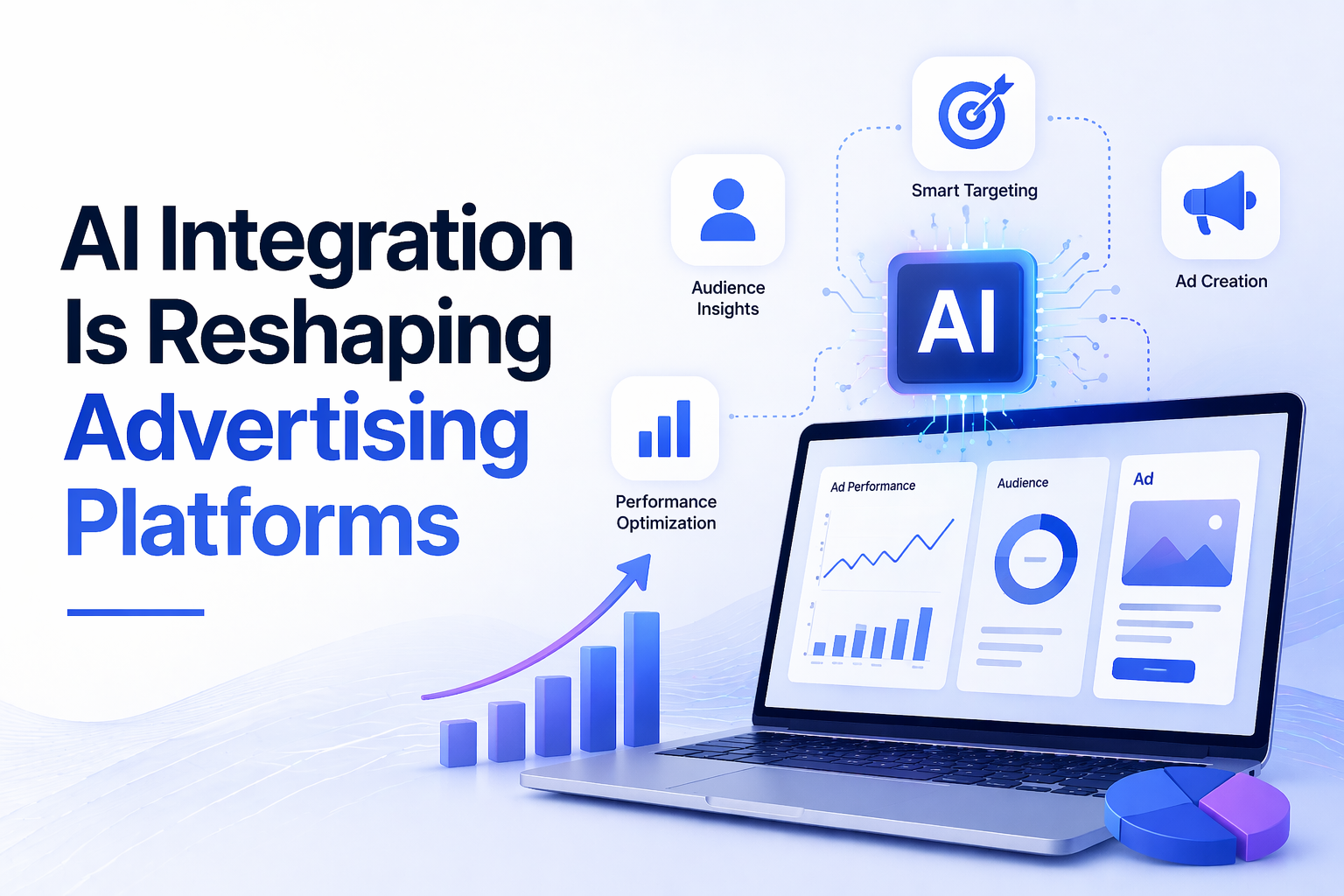

One of the most significant marketing developments this week is the continued expansion of artificial intelligence within major advertising platforms. Technology companies are accelerating efforts to embed AI directly into how ads are created, delivered, and experienced.
This shift reflects a broader transition in digital marketing, where automation and machine learning are becoming central to campaign execution.
AI Is Becoming Core to Advertising Infrastructure
Leading platforms such as Google are increasingly integrating AI into their advertising ecosystems. Recent updates indicate a move toward more automated campaign structures, where machine learning systems handle targeting, bidding, and optimization with limited manual input.
These developments are designed to:
- Improve campaign efficiency
- Enhance targeting accuracy
- Reduce the need for manual adjustments
As a result, AI is no longer an optional tool but a foundational component of modern advertising.
Expansion Into Conversational Environments
A notable aspect of this shift is the integration of advertising into AI-driven conversational interfaces. Platforms are exploring ways to incorporate ads within chat-based experiences, where users interact directly with AI systems rather than traditional search results.
This represents a change in how advertising is delivered:
- Ads may become more contextually relevant
- Messaging may be integrated into conversations
- User interactions may become more personalized
These developments suggest that the traditional separation between content and advertising is becoming less defined.
Implications for Campaign Structure
The increased role of AI is also influencing how campaigns are structured and managed.
Key changes include:
- Reduced reliance on manual audience segmentation
- Greater emphasis on input signals and data quality
- More automated decision-making across campaign lifecycles
This allows campaigns to operate continuously, adjusting in real time based on performance data.
Shifting Role of Marketers
As automation expands, the role of marketing professionals is evolving.
Rather than focusing primarily on execution, marketers are increasingly responsible for:
- Defining strategic direction
- Developing creative assets and messaging
- Interpreting performance data
This shift reflects a broader move toward strategy-led marketing supported by automated systems.
Measurement and Accountability
Another important development is the growing emphasis on measurable performance. As AI takes on a larger role in campaign execution, businesses are placing greater importance on understanding outcomes and return on investment.
This includes:
- Improved tracking and attribution
- Greater transparency in reporting
- Increased focus on performance metrics
These factors are shaping how advertising effectiveness is evaluated.
Conclusion
This week’s developments highlight the continued integration of AI into the core of digital advertising. As platforms expand their capabilities, automation and machine learning are becoming central to how campaigns are executed and optimized.
Understanding these changes is essential for businesses looking to remain informed about the direction of the marketing industry.